
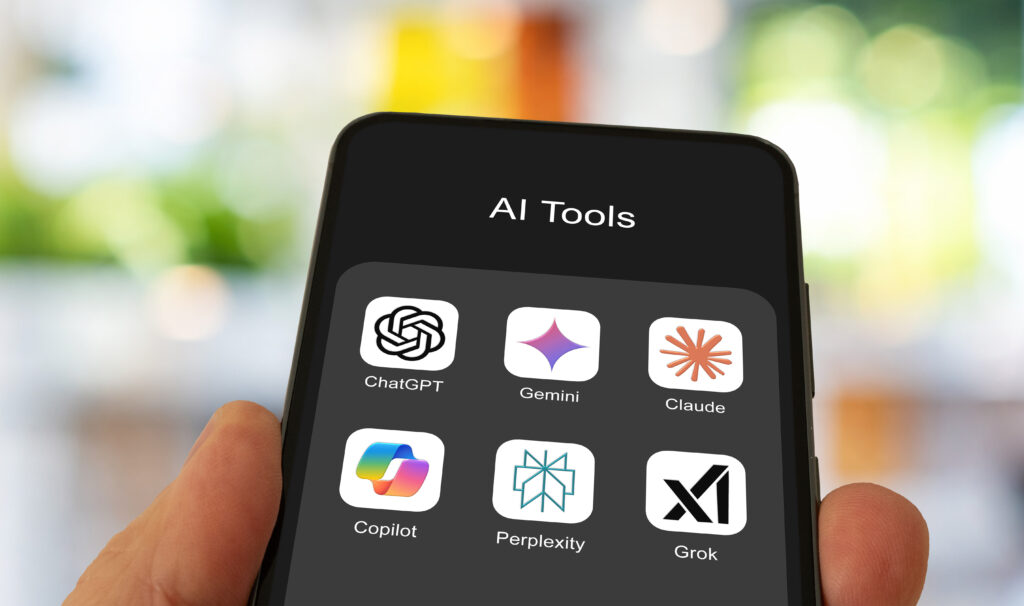
I’ll admit that I frequently use AI as my personal research assistant, which is why I’ve learned it can sometimes give you very wrong answers. I recently asked ChatGPT what a character’s nickname is in the Netflix series, Stranger Things. ChatGPT gave me a quick, confident answer, but it was wrong. AI didn’t stop at not knowing their nickname or the character — it actually tried to convince me that Stranger Things season 5 was never released. It told me that the character I was remembering was “from a viral fake leak / parody script that’s been floating around TikTok and fan forums.”
It took me correcting it multiple times and even sending it to Netflix before it finally admitted it was wrong. This unexpected moment turned into a big reminder for me as a Digital Marketing Strategist: AI is powerful and quick, but it isn’t perfect.
AI SEO Is Powerful but Distorted Without a Guide
AI is a powerful tool that can be used to make tedious processes and work more efficient, but it can never be fully relied on, especially for accuracy. Using AI on the job and in everyday life can be beneficial if your goal is to get a quick answer, but critical information should always be fact-checked!
Where AI SEO Excels
AI does a great job of analyzing large amounts of data, identifying patterns, and automating repetitive work. This can help you complete tasks more quickly than if you did them manually. AI does best with tasks that have static, defined rules, large-scale workloads, and require rapid analysis. Some ways that I use AI are:
- Categorizing a large list of keywords in groups based on specific patterns
- Completing grammar and spelling checks
- Conducting research on the target audience within an industry
- Ideating page outlines to get past writer’s block
However, without review, AI-generated content can lead to incorrect answers and misinformation about your brand by “hallucinating” information it doesn’t actually know.
Where Human SEO Still Wins
Even when you use a detailed, long prompt in AI models, otherwise known as Large Language Models (LLMs), they still lack true contextual understanding. And unless you explicitly tell AI something like “Ask me any questions you need to fill in any contextual information or knowledge gaps,” AI may find general information and “hallucinate” content. This is why it’s so important to review the work AI provides for you. When comparing people vs. AI, humans are more emotionally intelligent, have full context, and bring high-level strategic reasoning. Have you ever read something and thought to yourself, “This was obviously written by AI?” This is because humans have the ability to be more creative and original in our work. We’re also better at working through unstructured or complex problems because of our contextual reasoning and memory. And although AI does its best to mitigate ethical bias and poor judgment in responses, it still relies on reinforcement learning and human feedback. The answer isn’t choosing between AI and human expertise. It’s learning how to combine the strengths of both.
The Hybrid Model: AI + Human = Maximum AI Visibility
I’ve found that the best way I can use AI is as a complementary tool for work I’ve already completed. Studies have shown that a combination of human and AI work, when both do what they do best, provides the best outcome. AI models heavily rely on human guidance to train and teach them to improve the quality of their work. Providing detailed prompts, asking AI to ask for more information, and correcting inaccurate responses can significantly improve the quality of its answers over time. In practice, this means training AI to understand the correct information about our clients so that when their target audience asks a relevant question, AI does not have to assume an answer, risking misinformation, or worse, not citing or mentioning their brand at all.
How I Use AI SEO Responsibly
Rather than relying on AI to fully produce final deliverables, I use AI to assist with time-consuming and repetitive tasks. This allows me to move through the earlier stages of my work more quickly, so I can spend more time focusing on higher-value and more complex stages like refining messaging, ensuring accuracy, and aligning content with SEO strategy. I also avoid including sensitive or proprietary client information in AI prompts because this can teach AI private information that clients may not want publicly visible. By combining AI’s speed and analytical capabilities with my own judgment, contextual understanding, and ethical responsibility, I’m able to produce great work with both efficiency and reliability.
Don’t Fear AI – Train It!
AI shouldn’t be something you fear. It should be something we learn how to guide. Like any powerful tool, its effectiveness depends on how you use it. When we take the time to train AI through thoughtful prompts, clear context, and consistent feedback, it becomes much more accurate and helpful. But even with the best prompts, human oversight remains essential to validate information, apply strategic thinking, and ensure content resonates with its audience. Instead of replacing human expertise, AI works best as an extension of it. When marketers combine AI’s speed and analytical capabilities with human creativity, judgment, and experience, we unlock a smarter and more effective approach to SEO.
FAQ
Is AI reliable?
AI can be incredibly quick at handling repetitive tasks like analyzing large datasets and spotting patterns, but it isn’t perfect. It can sometimes give you inaccurate or misleading results, especially when it doesn’t understand all of the information and has to fill in its own knowledge gaps. This is referred to as hallucination. When utilizing AI in your work, it’s essential to review the content provided and validate the answers. That is what can make AI tools reliable.
Will AI replace human SEO professionals?
No, AI will not replace human expertise anytime soon. AI has been proven to be best used as a complement to SEO professionals, not a replacement. While AI can be much quicker at certain tasks such as research and analysis, humans still excel at creativity, building strategy, and complete understanding.
How do I prevent AI from giving inaccurate or misleading information about your business?
The key to preventing AI from writing inaccurate or misleading information about your business is to train and teach it what the correct answer is. Including clear answers and all relevant context on your website can help train AI and reduce errors. This also increases AI’s understanding of your brand and can help increase visibility in these tools.
What are the risks of relying solely on AI for SEO content?
Relying entirely on AI can lead to generic, inaccurate content that feels disconnected from your brand’s voice. AI may “hallucinate” answers, overlook context, and fail to capture SEO intent. Without reviewing the piece, you may be posting misleading information and missing opportunities to make your brand stand out against competitors. Using AI responsibly can mitigate these risks while still allowing you to take advantage of its speed and efficiency.